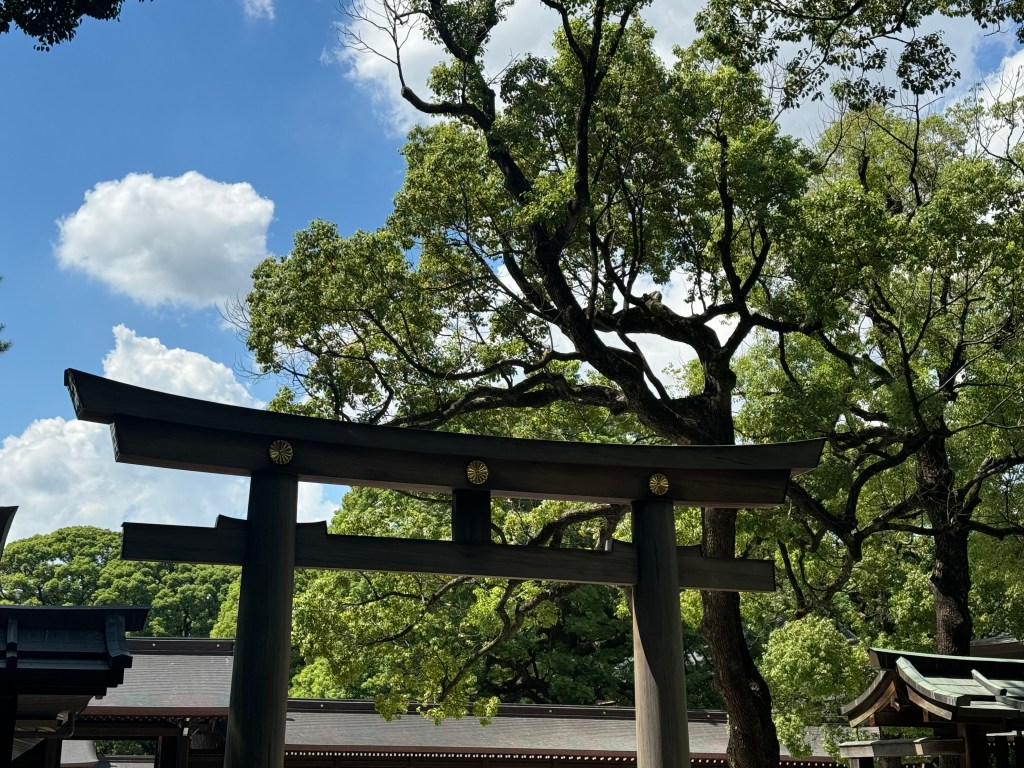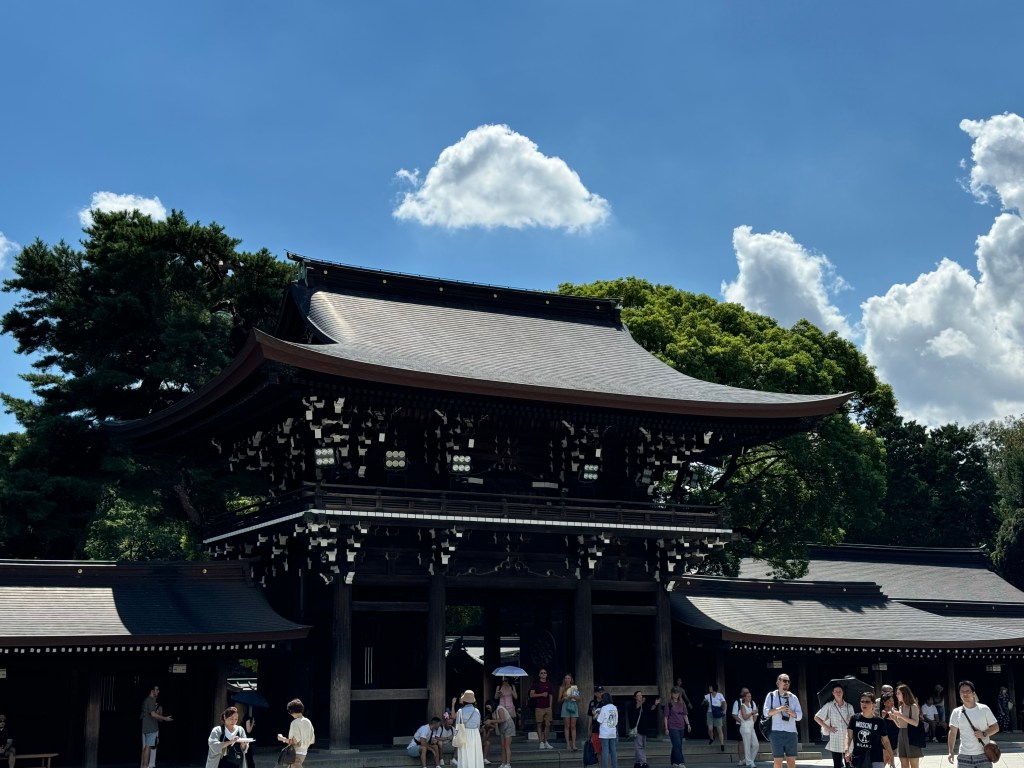
Sayonara. The sun sets on the package tour

I had forgotten how good Japan is to visit. Despite Hans Solo, despite the long hours in the bus, despite the patience required to travel with 36 other people who just one.  week before were perfect strangers. Despite the fact I said I would never do a package tour and despite the fact the package tour took us to just a few key sites and totally missed out on seeing the actual cities of Tokyo and Kyoto and had us on the outskirts. Despite my complaints about all of this and more – Japan is beautiful.

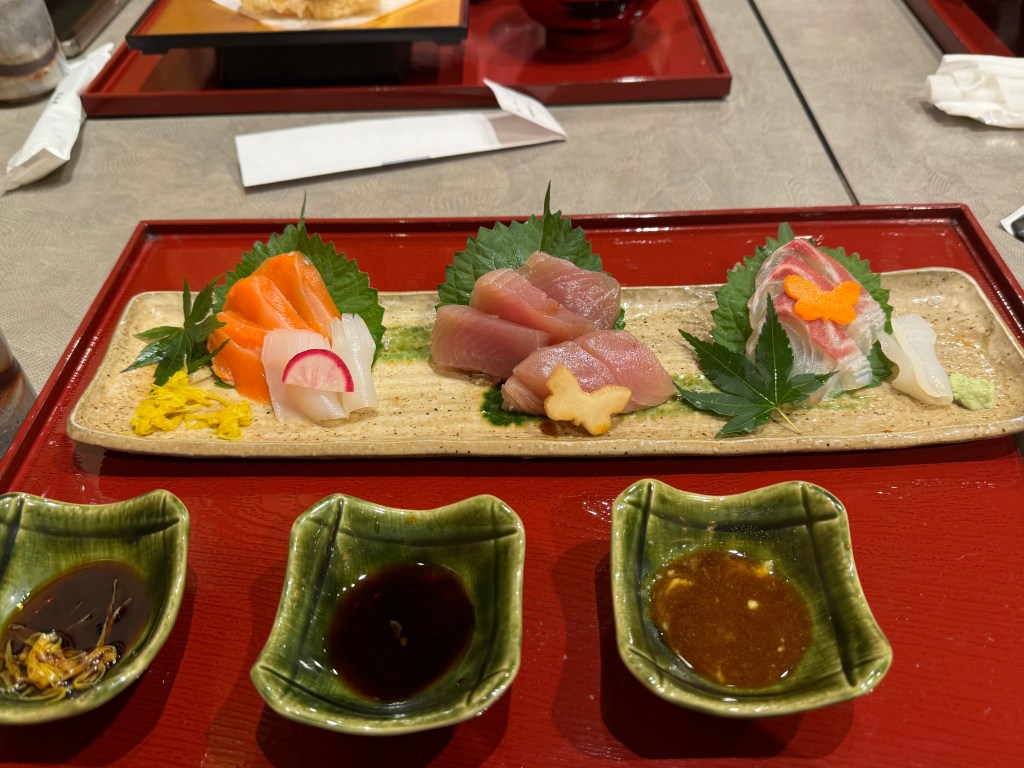
The Japanese people are kind and patient – and extremely quiet. The food is delicious, well prepared and beautifully presented. Even the food at convenience stores and highway rest areas is fantastic and we experienced many at both of these. I laughed out loud at our first highway rest area. I walked into the female toilets to find women from our bus, videoing the facilities. They hadn’t seen anything so clean, functional and well organised including live flower arrangements, at public toilets before.
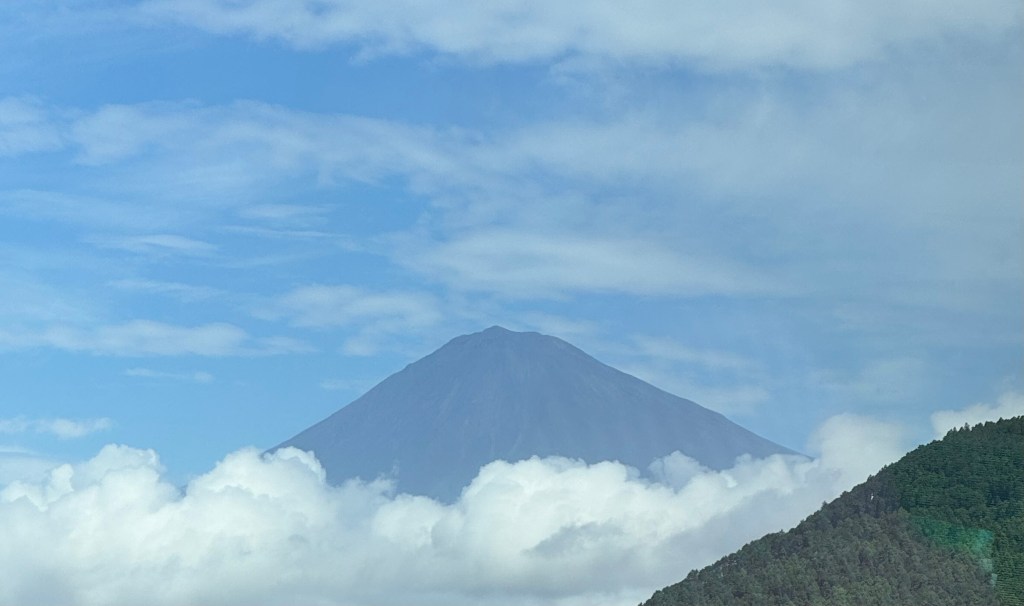
The trip to Mount Fuji, Fuji-san, was six hours on a bus and Fuji was clouded in. Fortunately we saw it later from the bus on the trip back to the airport to leave Japan. Fuji-san was mocking Hans Solo. At least that was what I thought. Or maybe Fuji-san was mocking us.
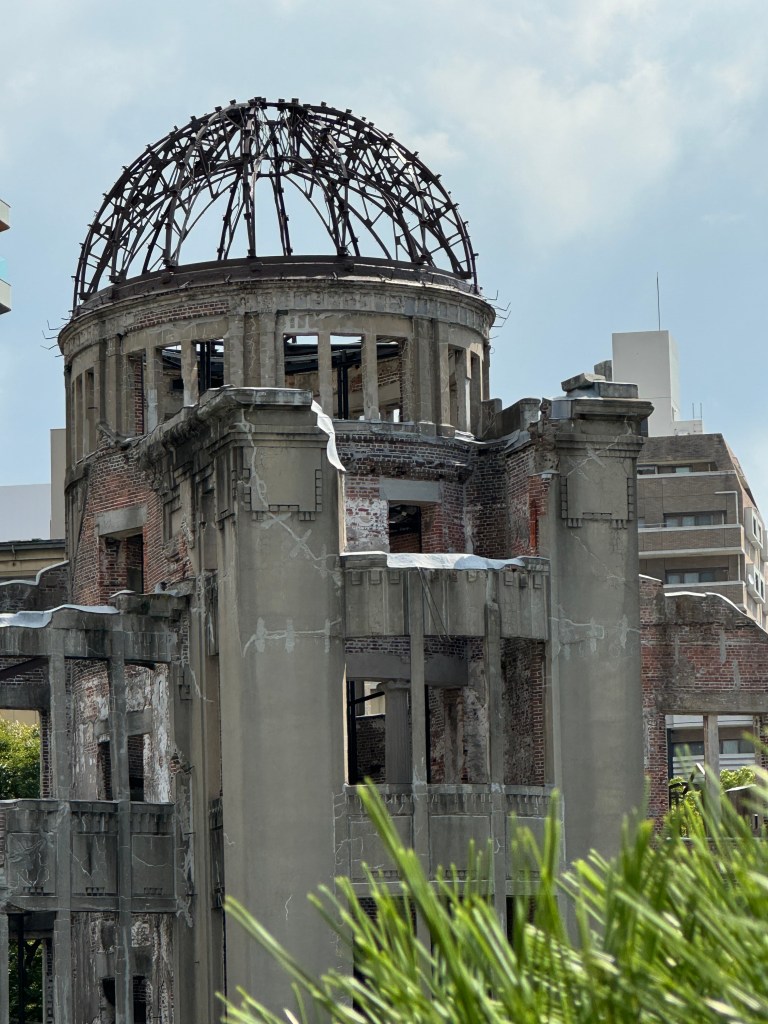
The one optional tour we did in Japan was a day trip to Hiroshima. Half the tour group including us sisters started the day with a Shinkansen train trip to Hiroshima from Osaka. There we were coupled with 12 members of the “dog” bus or “doggie people” as Hans Solo referred to them. 

The museum at Hiroshima was harrowing. The exhibition included photos taken soon after the bomb was dropped, original accounts from the people of Hiroshima including interviews, artworks and poetry. If we weren’t already crying at the sadness and the shame of humanity, seeing and hearing the small 10 year old students on a school excursion sobbing out loud, made me gulp in an attempt to prevent my sobs. The students were being shielded by their teachers in an attempt to hide them from view but to little avail. This made the sorrow more heartfelt and tangible. We were seeing photos of children, the same age as those on the excursion, burnt, black, with rags of skin hanging off their limbs. The visitors moved silently through the exhibition; the children’s sobs the only sound apart from the shuffling of feet. I was glad to reach the end and move from the darkness into the harsh sun. 

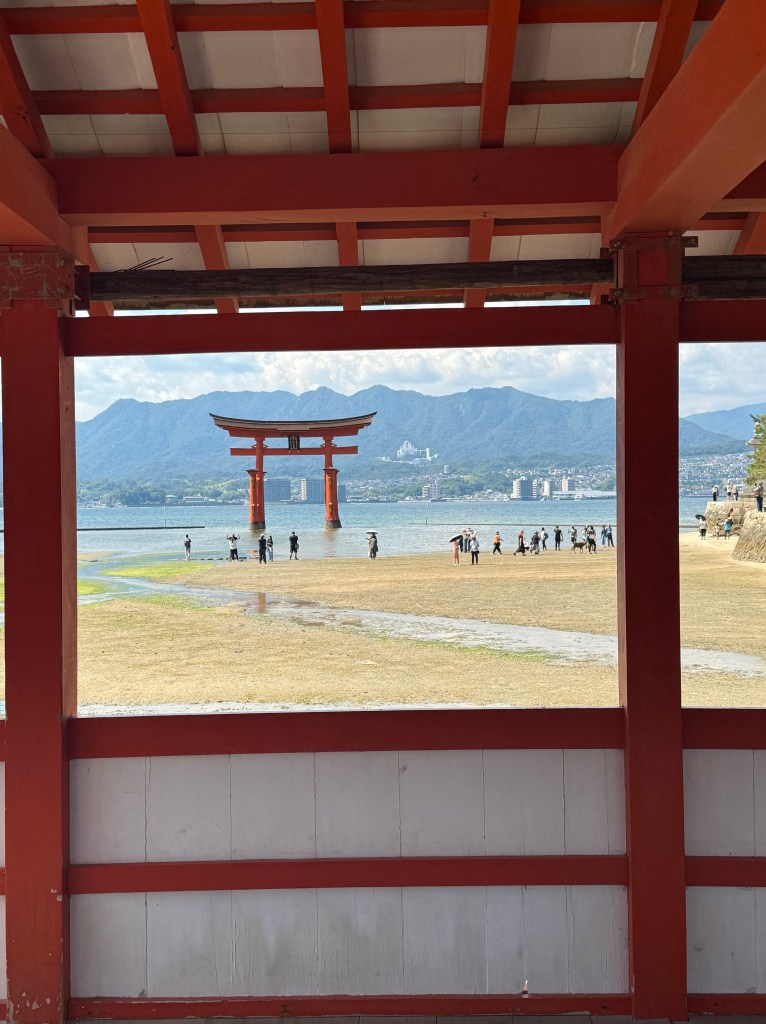
The afternoon part of the tour took us to Miyajima Island and the Itsukushima Shrine. A ferry ride to an island was exactly the antidote needed. On the bus to the ferry, Hans Solo was telling us that Miyajima is famous for its oysters. He asked the bus if we like oysters. The ones that did yelled out a loud “Yes”. 

“Yes”, he repeated, “will you eat oysters”?

“NO” yelled the people who don’t like oysters.

“What?”, asked Hans “you like oysters but you won’t eat them? Why can’t you make up your mind”?

The doggie person, male, across from me said “because they are women”.

If looks could kill, I’d be charged with murder. He returned my death stare with a “what?” look, seemingly innocent eyebrows raised. Casual, uncalled for misogyny is just not my thing. Again, a ferry ride and an island are the perfect antidote.

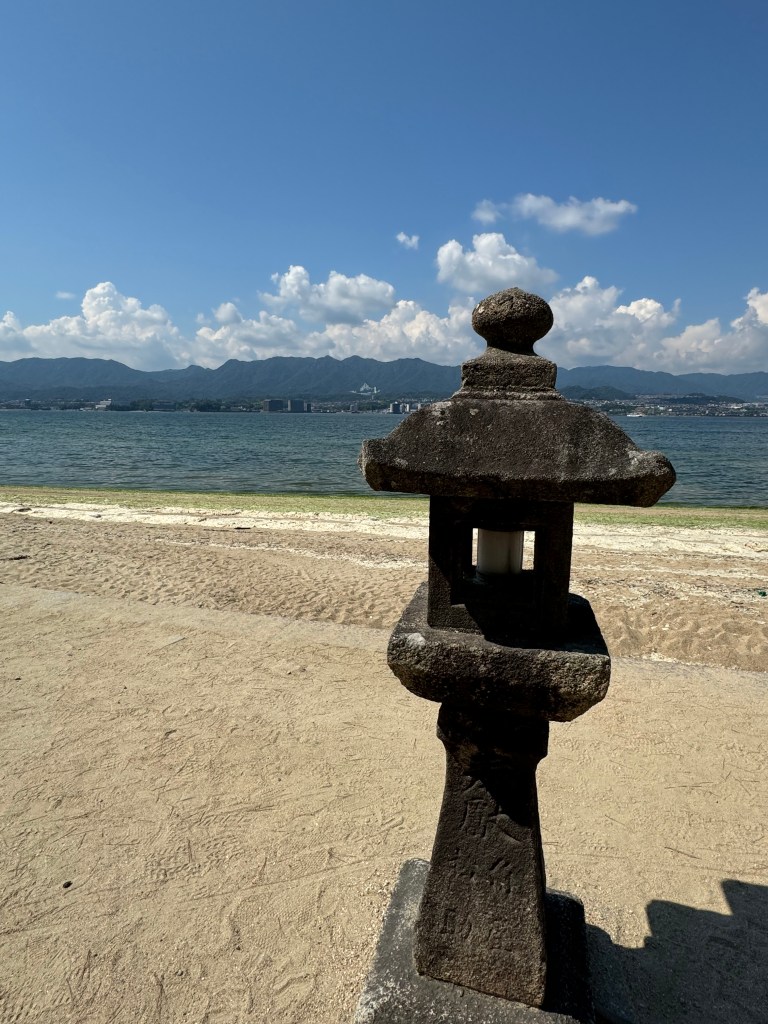
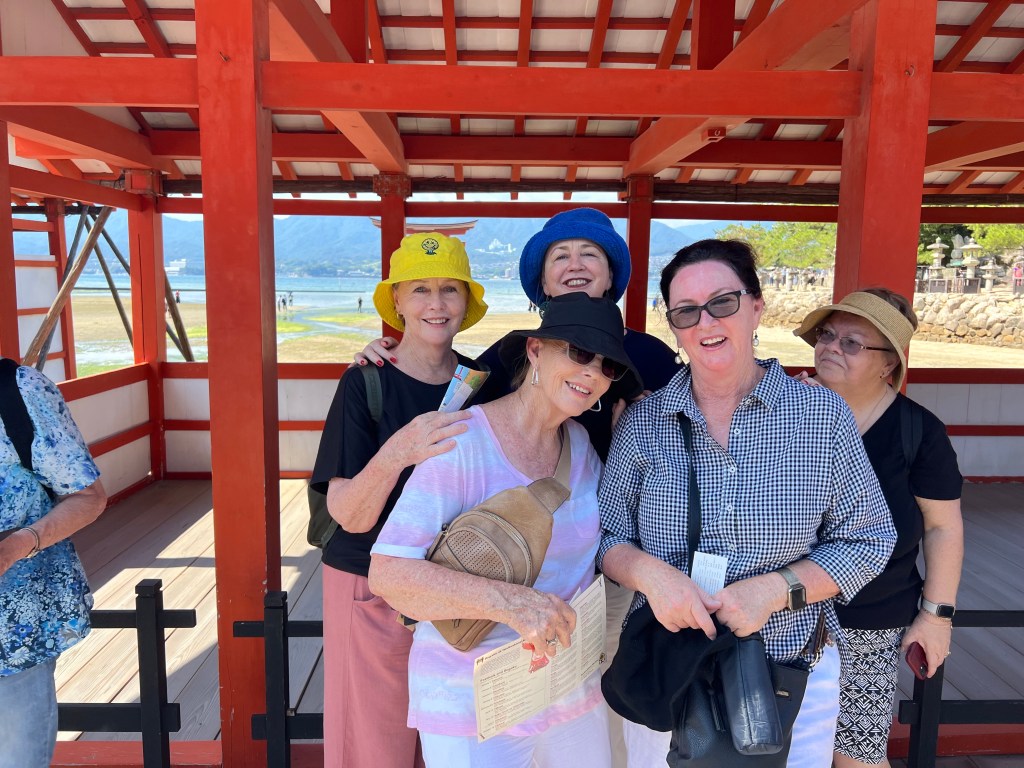
Miyajima is beautiful. We visit the shine, take a few selfies and stop for lunch. Wild deer gently walk past visitors and seek rest under the shady trees. Before long, it is time to head back and we all gratefully break away from the doggie people once we reach the train station. 

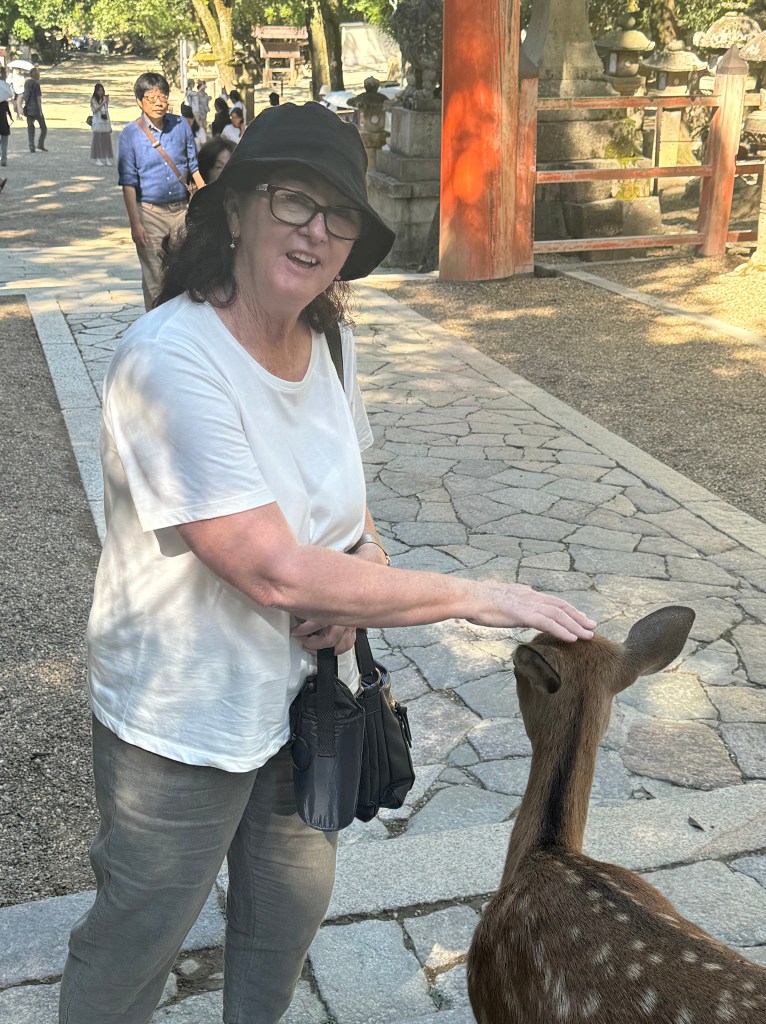
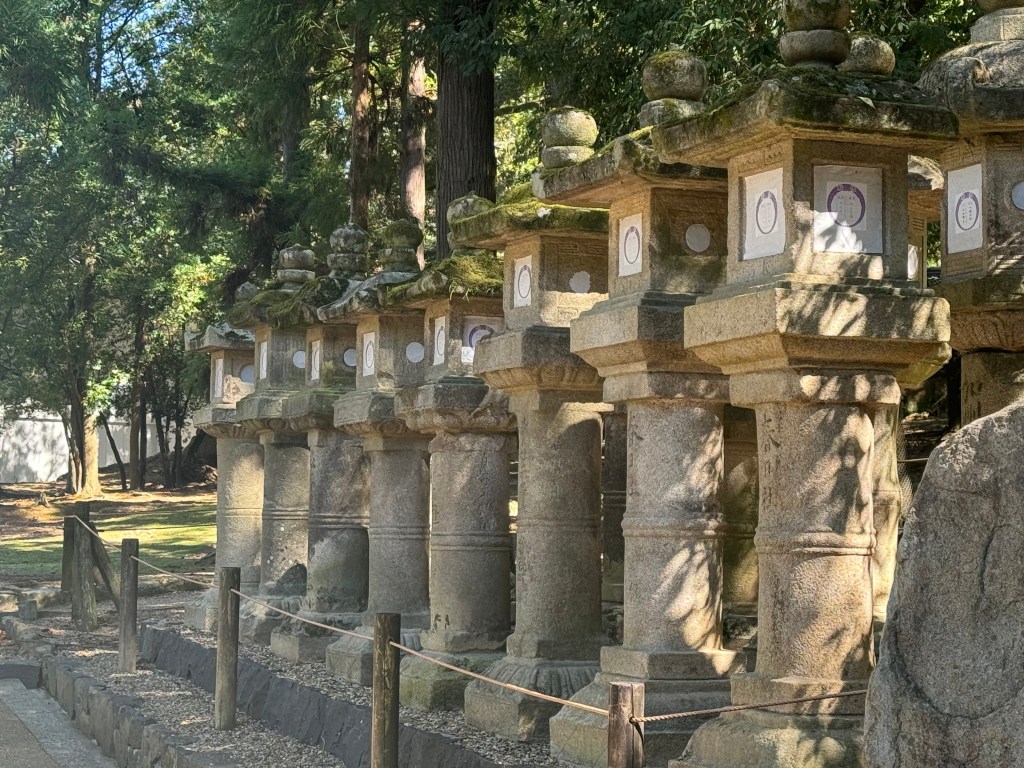
The following day is a trip to Nara to see, feed, bow at and avoid the deer. The park is beautiful and shady, the deer docile until you have rice crackers in your hand. You feed them a cracker and they bow to you. You bow back and give another. However, if you aren’t fast enough, they start butting, biting and chasing you. Hugely funny when it happens to other people. Also, a word of warning, it’s better not to get to close as they suddenly pee and poop and both can end up your leg. Also, muddy horns and grassy teeth can stain clothes.
With the tour over and Hans Solo’s banal commentary on everything from look at the guy filling his own petrol tank, “this is self-serve” to “see the panda truck, this is removalist. They pack up your home and move for you”, there was only one last thing to do, the five and half hour bus ride to the airport, then home via Hong Kong. No such thing as a direct fight when you are doing an inexpensive two-for-one Trip a deal.

I was worried about doing a cruise and a package tour. I would do a cruise again. I never thought I would say that, but I would. Would I do a package tour again? At the beginning of the trip, I was thinking maybe I would, if it was a small tour. Now I’m saying never. Never ever again. Sayonara.
Tokyo CSI – The Case of the Missing Case

During the chaos of disembarking from the ship and the bus being late and people going missing and fighting and all the rest of it, I quietly went to speak to our new guide, Hans. Yes, a Japanese guide who had been given a Dutch name. I advised him of the problem.

“We have a problem. One of my sisters has the wrong luggage case. We think someone took hers by mistake, as they have the same red bandana tied around the handle. It was the only one left, so she took it but it is not her case. Are we able to sort this out? Can you help us please”?

“Yes. Yes. I will do but first, you see the situation. Many people here. Many people missing. No bus. I need to find the bus”, Hans replied.

“That’s OK, but we need to find the case”, I replied.

“OK. OK” he yelled over his shoulder as he disappeared amongst the dozens of buses in the parking lot.

Finally, when we were almost all on board, and he began his commentary about how we were going go find the missing passengers, a little about himself and some information on the dual religions of Japan. During his commentary, he would keep stopping to answer phone calls. Every time his phone rang or he looked at a message, Margaret and I would look at each other, nod knowingly, and assure each other this call was about her case. 

It never was.

I asked him after the break if he had any news. Hans assured me he had called the port and the case was being looked for. After the first tour highlight – I forget what that was now – I asked him again, “any news on my sister’s case?”.

“No news. Sit down now”, he snapped.

The bus, again named the Monkey bus, took us to the next site. The heat in Tokyo was unbelievable. It was now 36 degrees and walking anywhere was out of the question for us. We sat under a tree eating ice-creams while Hans Solo, as we were calling him, led the hardy to see the gate house of the Imperial Palace.

Back on the bus, Hans Solo advised we were about half an hour by train from the centre of Tokyo. He offered to take an extra excursion later that evening to “the intersection”, Shibuya Crossing. The Shibuya intersection is known as the busiest in the world. It is estimated approximately 2,000 people cross there every two minutes. Discussing with the sisters, we decided we wouldn’t go. I had been before and the others were tired. One of our fellow travellers on hearing our discussion, leaned over and said “I’m from India, I have seen that many people many times. We won’t be going”.  Given the sour feeling that had descended on the group, this light relief was welcomed as we made the decision not to go. 

I advised Hans Solo, when checking in we wouldn’t be going and asked him about the bag again. He replied there was no bag left at the ferry terminal and if we didn’t hear anything tomorrow, we would need to go to the police station back near the port. Rolling my eyes, we checked into our hotel and decided to stay local for dinner and have an early night.

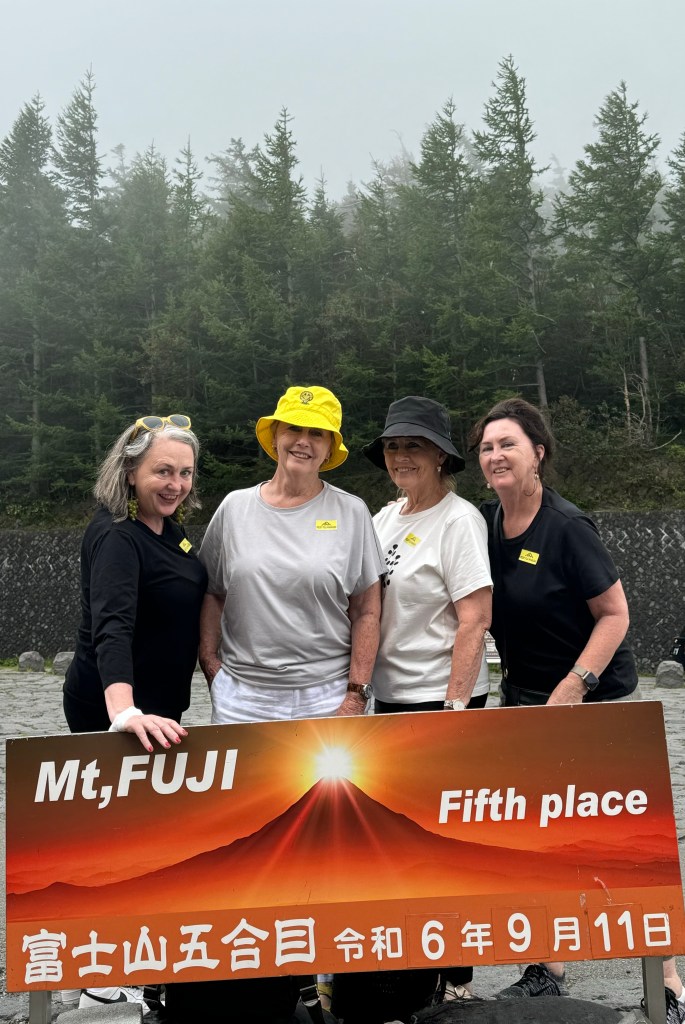
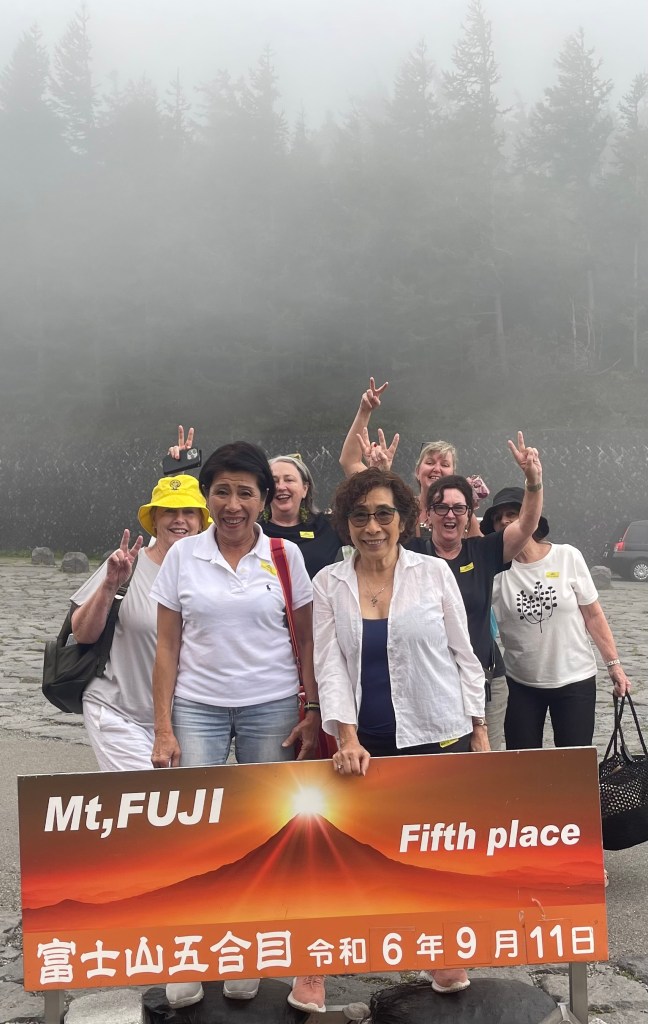
Unlike China, the optional tours in Japan were optional. So we decided to ditch the tour to visit a volcano the other day. We needed some space and rest from the bus, which was feeling like a crowded share house. Instead we stayed in the local area, Asakusa and helped Margaret restock on clothes and underwear. We rest of us also took advantage of the the shopping. 

I was last in Japan almost 15 years ago and it is incredible now how inexpensive things are, especially food and clothing. The convenience stores are a fantastic place to get the freshest sandwiches you have ever eaten for lunch as well as an amazing array of food that you have never thought of, that tastes so good.

After lunch, I texted Hans to find out if he had any information on the bag. He texted back that we would go to the Police Station near the ferry terminal tonight and asked if 8:00pm was ok for us.  What option did we have? We had planned to go into Tokyo city, but the bag was more important. We agreed knowing the ferry terminal at Yokohama was approximately an hour travel each way.

At 8:00pm, we met him downstairs. A few week-meaning fellow Monkeys, all had ideas on how we could find the bag. I pointed out …. somewhat impatiently … that during the day, I had tried calling the phone number on the bag, I had emailed MSC three times, I tried messaging the phone number on the bag, and finding the owner on facebook. All of which was “much more than Hans had done for us” I said loudly and looking at him accusingly. He then joined me in telling the others that we had to go. Somewhere along the line, he changed his mind and the local police station would do. I guess he didn’t want the two hour journey either.

We walked out of the door of the hotel to the corner police box. It was open but unattended with a sign to call a number. Hans spoke to a local in Japanese and told us we had to walk about ten minutes to the next. We did dragging the offending bag behind us and cursing the person who had taken Margaret’s bag. 

In the police box, slightly larger than the first, a young police officer was dealing with an old man sitting on the only seat in the room. Hans told us he would wait outside as he was on a phone call. His assistance in helping us was certainly lacking. We walked into the cool police station and waiting for the police officer to finish with the man. Then an older police officer came out from the back, nodded at us and wondered what to do. I knocked on the window and angrily beckoned Hans to come in and help. 

Hans pointed to the case and spoke in rapid Japanese. The older officer stared at the bag the whole time. When Hans finished, the officer asked a few questions, his eyes never leaving the bag. By now the younger officer had chased out the old man and was listening, her eyes darting between us an the case. Hans answered his questions and then started to make a phone call. As he did, another officer walked in from the front door. The story was repeated. The old police officer was still staring at the case. By now, I was ready to laugh. I looked over at Marg, so I could indicate with my eyes, that I was about to laugh out loud at the never-ending stare at the case. It was if staring at it would make it disappear and for his quiet night to return. Margaret, however, was holding back tears.

The last police officer to join in the discussion sat down at the computer in front of us. He told us in English that he was searching the data base to see if Margaret’s bag had been handed in. It hadn’t. He then told us, two forms would be filled out, one a lost property report for her bag and the second a found report for the other bag. Which the older officer was still staring at. Hans was still on his phone. Once the forms had been signed, and we quickly agreed we didn’t want a reward for the case we handed in, if it was offered. It was over. We left the police station and walked back into the hot Tokyo night, two days since Margaret’s luggage was lost, knowing we would probably never see it again.